New Report Says Display Challenges Have Cut Apple Watch Shipments in Half
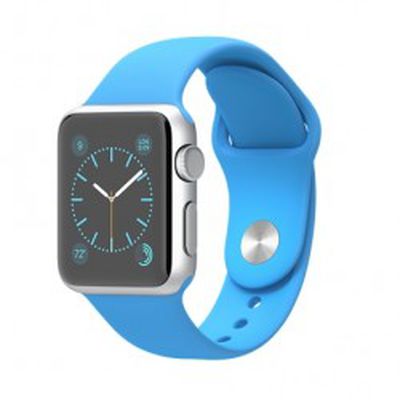 A new report out of Taiwanese publication Economic Daily News [Google Translate] claims that Apple has cut the expected production and shipping targets of the Apple Watch by half due to manufacturing challenges leading up to the launch of the device. (via GforGames).
The company initially planned to manufacture between 2.5 and 3 million units of the wearable per month, following its launch on April 24. A claim by Economic Daily News now states Apple has lowered expectations to produce 1.25-1.5 million Apple Watches every month.
The website cites sources within Apple's supply chain, pointing towards production snafus on the manufacturing of the Apple Watch's AMOLED display as the main culprit behind the tempered production expectations. Although it has yet to be confirmed by Apple itself, Economic Daily News claims the introduction of a new type of display used in Apple's manufacturing processes - unlike the traditional LCD screens of iPhones - has resulted in a slower production rate on the Apple Watch leading up to the device's launch.
One of the reasons for this change in plans apparently lies in manufacturing issues with the display (which is being produced by LG), leading to 30-40% yield capacity. Plastic OLED panels use PET (polyethylene terephthalate) instead of a glass substrate, thus giving them flexibility and lightweight. The only problem however, is that manufacturing plastic OLEDs requires a different method of creating a vacuum between the OLED panel and the plastic substrate, other than the traditional water jet vacuum pumps. And because PETs are very sensitive to humidity it looks like manufacturing the Watch’s display is a more complicated process than initially expected.
The source also points to slow production lines thanks to manufacturer Quanta, who has more experience in laptop manufacturing than in smaller devices like the Watch. According to Economic Daily News, Apple is already looking at expanding manufacturing options by involving Foxconn in the wearable's production process in the future.
Similar production-related stories have circulated before the launch of other Apple-related products in the past. Due to the high volume of such reports leading up to a device's launch, and no official word from Apple, today's report out of Economic Daily News remains sketchy at best.
Popular Stories
Bloomberg's Mark Gurman has high expectations for Apple's first foldable iPhone.
In his Power On newsletter today, he said the foldable iPhone will be "the most significant overhaul in the iPhone's history."
"iPhone 4, iPhone 6 and iPhone X were clearly a big deal, but this is a whole new design," he said.
Like Samsung's Galaxy Z Fold 7, the foldable iPhone will reportedly open up like ...
iOS 26.5 is now available for developers, and while it doesn't include any new Siri capabilities, there are some major changes for the European Union, and smaller tweaks for features available worldwide.
Suggested Places
In the Maps app, there's a new "Suggested Places" feature that recommends locations to visit based on trending places nearby and recent searches. When Apple launches ads in ...
Apple has been celebrating its upcoming 50th anniversary by hosting surprise performances and other events around the world over the past few weeks, and now Bloomberg's Mark Gurman has revealed details about the company's grand finale.
In a social media post, Gurman said Apple's celebrations will conclude this week with a finale at its Apple Park headquarters for employees.
A special...
Popular Stories
Apple is hoping to 3D-print aluminum device enclosures in the future, according to Bloomberg's Mark Gurman.
In today's "Power On" newsletter, Gurman revealed that Apple is pushing to move to 3D-printed aluminum enclosures for for future devices. The MacBook Neo relies on a new aluminum manufacturing process that saves as much metal as possible to drive down costs and speed up production....
Apple today launched its atrial fibrillation history feature for Apple Watch in mainland China.
Since 2022, Apple Watch in the U.S. has supported AFib History, which allows users diagnosed with atrial fibrillation to view an estimate of how frequently their heart is in this type of irregular rhythm.
The feature analyzes pulse rate data collected by a photoplethysmography (PPG) sensor to...
Apple's current blood oxygen sensing implementation in the U.S. does not infringe on patents owned by Masimo and Apple will not face a revived import ban, a U.S. International Trade Commission judge said this week (via Reuters).
After Apple was found to have violated Masimo's patents related to blood oxygen sensing, the Apple Watch faced a U.S. import ban that caused Apple to briefly pause...