Apple's Phil Schiller on HomePod: We Want to Create a New Kind of Music Experience in the Home That Sounds Incredible

Over the weekend, Apple marketing chief Phil Schiller did a quick fifteen minute interview with Sound & Vision, where he once again explained some of the technology behind the HomePod, shed some light on why Apple ultimately decided to create an in-home speaker, and explained how the HomePod will stand out among other smart speakers on the market.

Schiller believes that Apple is in a position to create a "new kind of music experience" that not only "sounds incredible," but is also "fun to interact with." He says that's the driving force behind Apple's work on the smart speaker. Apple's focus, though, isn't on a single product -- the company wants to design a unified experience that's the same throughout the day.
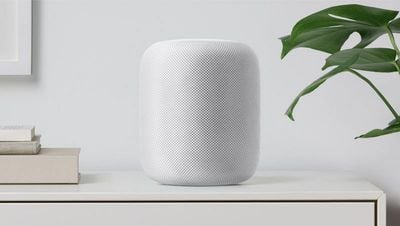
HomePod on shelf 800x451

We don't think it's just about HomePod though, or any one product, it's about creating an experience that moves with you throughout the day -- so the experience you have at home, is replicated in the car with CarPlay, at work with iPad and Mac, and when you're out for a run with Watch and iPhone. You can listen to the same music, control your home accessories or ask Siri to do something for you, wherever you are.

Schiller says that Apple Music, Siri advancements in personal music discovery, and Apple's innovative audio work "come together" in the HomePod to deliver an "amazing music experience" to customers.

He went on to explain many of the technological advancements that improve sound quality in the HomePod, including machine learning to allow the HomePod to sense and adapt to its environment, the A8 chip for real-time acoustic modeling, audio beam-forming, and echo cancellation, and a more advanced thinking of speaker arrays to "create a wide soundstage."

Schiller also explained in detail how the HomePod's spatial awareness features work. From the moment it's plugged in, the HomePod senses its location. The built-in microphone array listens to how sound reflects from neighboring surfaces to determine where it's located in a room and what's nearby, adjusting audio accordingly. The A8 chip beams center vocals and direct energy away from walls that are detected, while also reflecting ambient reverb and back-up vocals against the wall for better dispersion into the room.

The end result is a wide soundstage with a feeling of spaciousness and depth. This entire process takes just seconds and it doesn't stop with the initial setup. Every time you move HomePod, it uses the built-in accelerometer to detect a change in its location and continues to make sure the music sounds great and is consistent, wherever it's placed. We've also done some great things to help minimize the audible side effects of compression artifacts by developing studio level dynamic processing to optimize for rich, clean bass even at loud volumes.

Thus far, it appears Apple's efforts to focus on sound quality have been successful. While full HomePod reviews have not yet been shared, initial first impressions from reviewers who were able to spend a short amount of time with the HomePod have been positive. Many reviewers were highly impressed with the sound quality of the device, which has been described as "warm," "astonishing," "precise," and an "aural triumph."

Apple will, however, need to convince its customers that sound improvements are worth the premium price the company is charging for the device. HomePod is more expensive than competing products from Google and Amazon, but some reviewers have questioned whether the average consumer will value sound quality more than affordability.

Phil Schiller's full interview, which goes into more detail about Apple's aim with the HomePod, how voice recognition works, HomeKit integration, and more can be read over at Sound & Vision.

The HomePod, which is priced at $349 in the United States, can be pre-ordered from the online Apple Store. The first HomePod orders will be delivered to customers starting on Friday, February 9, the official launch date of the device.

Related Roundup: HomePod
Buyer's Guide: HomePod (Neutral)

Popular Stories

Apple Wallet ID Illinois

Apple Plans to Expand iPhone Driver's Licenses to These 7 U.S. States

Wednesday December 24, 2025 8:40 am PST by
In select U.S. states, residents can add their driver's license or state ID to the Apple Wallet app on the iPhone and Apple Watch, and then use it to display proof of identity or age at select airports and businesses, and in select apps. The feature is currently available in 13 U.S. states and Puerto Rico, and it is expected to launch in at least seven more in the future. To set up the...
iPhone Top Left Hole Punch Face ID Feature Purple

iPhone 18 Pro Launching Next Year With These 12 New Features

Tuesday December 23, 2025 8:36 am PST by
While the iPhone 18 Pro and iPhone 18 Pro Max are not expected to launch for another nine months, there are already plenty of rumors about the devices. Below, we have recapped 12 features rumored for the iPhone 18 Pro models. The same overall design is expected, with 6.3-inch and 6.9-inch display sizes, and a "plateau" housing three rear cameras Under-screen Face ID Front camera in...
maxresdefault

Where's the New Apple TV?

Monday December 22, 2025 11:30 am PST by
Apple hasn't updated the Apple TV 4K since 2022, and 2025 was supposed to be the year that we got a refresh. There were rumors suggesting Apple would release the new Apple TV before the end of 2025, but it looks like that's not going to happen now. Subscribe to the MacRumors YouTube channel for more videos. Bloomberg's Mark Gurman said several times across 2024 and 2025 that Apple would...
maxresdefault

10 Mac Apps Worth Trying in 2026

Wednesday December 24, 2025 9:27 am PST by
2026 is almost upon us, and a new year is a good time to try out some new apps. We've rounded up 10 excellent Mac apps that are worth checking out. Subscribe to the MacRumors YouTube channel for more videos. Alt-Tab (Free) - Alt-Tab brings a Windows-style alt + tab thumbnail preview option to the Mac. You can see a full window preview of open apps and app windows. One Thing (Free) -...
iOS 26

iOS 26.2 Adds These 8 New Features to Your iPhone

Monday December 22, 2025 8:47 am PST by
Earlier this month, Apple released iOS 26.2, following more than a month of beta testing. It is a big update, with many new features and changes for iPhones. iOS 26.2 adds a Liquid Glass slider for the Lock Screen's clock, offline lyrics in Apple Music, and more. Below, we have highlighted a total of eight new features. Liquid Glass Slider on Lock Screen A new slider in the Lock...
airpods color prototypes

Apple Tested AirPods in Bright Colors

Saturday December 27, 2025 6:06 am PST by
Apple reportedly tested a version of the first-generation AirPods with bright, iPhone 5c-like colored charging cases. The images, shared by the Apple leaker and prototype collector known as "Kosutami," claim to show first-generation AirPods prototypes with pink and yellow exterior casings. The interior of the charging case and the earbuds themselves remain white. They seem close to some...
iPhone Fold Vertical Feature

Why Apple's Foldable iPhone May Be Smaller Than Expected

Tuesday December 23, 2025 5:21 am PST by
Apple's first foldable iPhone, rumored for release next year, may turn out to be smaller than most people imagine, if a recent report is anything to go by. According to The Information, the outer display on the book-style device will measure just 5.3 inches – that's smaller than the 5.4-inch screen on the ‌iPhone‌ mini, a line Apple discontinued in 2022 due to poor sales. The report has led ...
Foldable iPhone 2023 Feature Iridescent Search

Samsung Developing 'Wide Fold' With iPhone Fold-Like Design Ahead of Apple's 2026 Launch

Tuesday December 23, 2025 11:55 am PST by
Samsung is working on a new foldable smartphone that's wider and shorter than the models that it's released before, according to Korean news site ETNews. The "Wide Fold" will compete with Apple's iPhone Fold that's set to launch in September 2026. Samsung's existing Galaxy Z Fold7 display is 6.5 inches when closed, and 8 inches when open, with a 21:9 aspect ratio when folded and a 20:18...
iPhone SE Cosmopolitan Clean

Apple Discontinued These 25 Products This Year

Wednesday December 24, 2025 7:24 am PST by
With the end of 2025 near, the time has come to look back at the devices and accessories that Apple discontinued throughout the year. Most of the products that were discontinued this year were simply replaced by a new model with an updated chip. However, the iPhone SE line was entirely discontinued when the iPhone 16e launched, and the iPhone Plus line is being phased out. Below, we have...

Top Rated Comments

OldSchoolMacGuy Avatar
103 months ago
I think people will be surprised by the positive reviews the HomePod will receive.

Remember how people slammed the AirPods before they actually tried them, then found they loved them. They also slammed the Apple Watch and it turned into a great success too.

Calling a product a failure before it even hits the market almost always turns out to be a failed prediction. It's far easier to gauge success before release than failure. We see it time and time again.
Score: 47 Votes (Like | Disagree)
jrath1 Avatar
103 months ago
I can see it now...Johnny Ive "We have redefined audio, with sound waves that are now 20% thinner, and 10% lighter."
Score: 30 Votes (Like | Disagree)
OldSchoolMacGuy Avatar
103 months ago
And still no high-fi audio via Apple Music.
99% of listeners don't care. For the vast majority of users, a normal 128bit MP3 is perfectly fine.

Apple markets to the average user. They're the largest percentage of the market and the largest potential to make money.

Just look at how going after hi-fi audio has worked out for Tidal.
Score: 21 Votes (Like | Disagree)
ApfelKuchen Avatar
103 months ago
I know it's got seven tweeters, Apple won't let you forget that, but how is subscribing to Apple's compressed music service to be pushed through a mono system of speakers going to "sound incredible?
You could check my earlier explanation of why this is not a "mono system." HomePod takes a stereo input, analyzes that stereo "sound stage," and synthesizes it into an 8-channel system - each speaker in the box has its own channel.

Mono (when created from a stereo signal) is the sum of Left and Right - it is always less than the sum of its parts, because the sum of left and right includes the loss of certain frequencies from certain instruments... Sorry, I don't want to write a treatise on phase cancellation, but basically, summed mono sucks.

Speaking as a former audio engineer who produced concerts for live radio broadcast for 25 years, I had to accept mono as a fact of life - lots of people would be listening on crappy audio systems, and I wanted my sound to be as good as it could be on those systems as well as $100,000 audiophile systems. That meant doing what I could to avoid phase cancellation, and it meant checking my mix in mono and on crap speakers as well as my expensive stereo control room monitors. It was really nice to get compliments from audiophiles on the quality of my sound, but I also had to make sure the masses wouldn't tune out.

The audio industry has long taken advantage of the knowledge that our ears can more easily detect location from mid- and high-frequency sounds, but we have a harder time detecting directionality in low frequency sounds. That's why so many home theater systems have a single sub-woofer and multiple small "satellite" speakers carrying only midrange and highs. It's a highly economical solution to an otherwise expensive and space-wasting alternative - 5-7 large, full-range speakers.

In the case of HomePod, you can consider this to be the equivalent of an 8-speaker home theater system - mono woofer, plus 7 satellites - they just happen to be arrayed in a single enclosure. It's a similar approach to the one Bose has been using for several generations - adding complexity to the listening room sound field by mounting additional speakers on the rear of the speaker enclosure, facing the wall. The big difference is that Bose did this passively - no signal processing. Stereo in, stereo out. Apple, on the other hand, is throwing an entire computer at this.

As to "Apple's compressed music service," of course it's data-reduced, for the same reason web sites post JPG images, not TIFFs or RAW. Bandwidth and storage space come at a cost, both in dollars and in real-world performance. Now, you may happen to be a cost-is-no object audiophile who believes he can detect every nuance and imperfection, but a mass-market product has to strike a balance in order to satisfy the largest possible customer base - if too many users can't stream the service because it demands too good a cellular (or even wifi) signal, then there are going to be a lot of unhappy customers.

In the end, music listening is NOT about technical quality, it's about music - composition, musicianship, arrangement, melody, lyrics, harmony, counterpoint... Someone who truly loves the music, for its own sake, isn't going to let themselves be upset by technical imperfections unless they're so glaring and obnoxious that they become distracted - say, the person sitting behind you coughing or opening a candy wrapper (or loud pops and clicks from a black vinyl disk) during a heart-rending pianissimo passage. What audiophiles typically complain about can be compared to the story of the Princess and the Pea. Sure, the princess may truly have been able to detect that pea under a stack of mattresses, but it takes a really special individual to lose sleep over it.
Score: 17 Votes (Like | Disagree)
HobeSoundDarryl Avatar
103 months ago
Sound quality is amazing according to all the technology journalists/sites allowed to review it in advance. Interesting that not one audio journalist/web site was invited to review it...
Best I know, nobody has actually reviewed it yet. Instead, they got to go to a demo run by Apple. A demo is not a review. For example, in a demo, the demonstrator- Apple- steers the presentation to their product's strengths. In a well done demo, the outcome is predetermined and the demonstration will be engineered to be sure that the desired outcome is the one that results from it.

Real objective reviews will arrive AFTER 2/9, when independent AV reviewers can pound one of these in their own labs, per their own approaches, with their own musical selections. Instead of focusing on only what these do best, they'll consider everything with an aim to build a clear pros & cons list.

Real reviews will also answer about a dozen questions still flying around and still unanswered or ambiguous. For example, relatively how much smarter is Siri here? As smart as it's competitors? Smarter? Or not as smart? Does it definitely have Siri command access to our own ripped music files on our Macs? With Match or without? AM required or not? Will it play the lossless rips on our Macs or only the Matched copy in the cloud? And on and on.

To a buyer, what it's not (relatively) is perhaps as important as what it is. We don't even have a complete picture of what it is yet. Every "review" so far reiterates what we know from the marketing messaging (mostly from way back when it was first revealed) instead of telling us much new.
Score: 14 Votes (Like | Disagree)
Ds6778 Avatar
103 months ago
And still no high-fi audio via Apple Music.
Score: 13 Votes (Like | Disagree)