Apple Watch Gets One Crucial Fitness Metric Wrong, Researchers Say

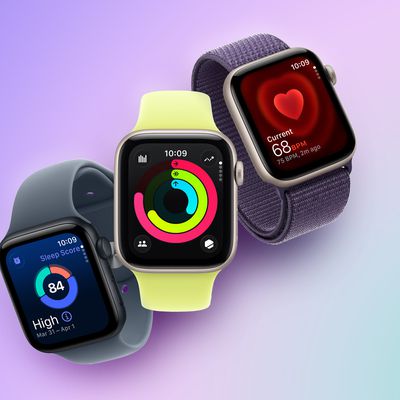
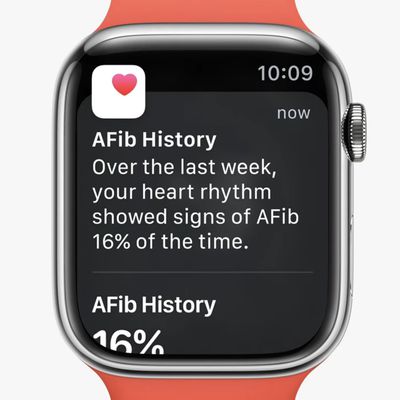
The Apple Watch provides highly accurate measurements of heart rate and step count, but their estimates of calories burned can be significantly off, according to a new peer-reviewed meta-analysis conducted by researchers at the University of Mississippi (via CNET).

Apple Activity Rings Graphic
The study reviewed 56 previously published studies evaluating the Apple Watch's performance against gold-standard clinical tools in three core areas: heart rate monitoring, step count tracking, and energy expenditure estimation.

The researchers reported low mean absolute percentage errors (a common metric used to assess measurement accuracy) of 4.43% for heart rate and 8.17% for step counts. These fall within the threshold generally considered acceptable for consumer-grade fitness devices. In contrast, the average error for energy expenditure was 27.96%, more than three times the margin considered acceptable for accurate measurement.

The analysis incorporated data from studies spanning multiple Apple Watch models and user groups. The high error margin in calorie estimation was consistent across all cohorts and forms of physical activity.

These devices are great for keeping track of habits and staying motivated. But do not take every number as 100% truth, especially the calories. Think of it as a helpful guide, not a diagnostic tool. It is useful but not perfect.

The findings align with previous independent evaluations that have raised concerns about the reliability of calorie burn estimates from consumer-grade wearable devices like Apple Watches.

While the Apple Watch has undergone continuous generational improvements since its debut in 2015, the researchers noted that even newer models still exhibit considerable error in calorie estimation. However, the study did observe a trend toward improved accuracy in more recent models:

While we cannot say every update is a big leap forward, there is a noticeable trend of gradual improvements over time. It shows that Apple is refining the technology over time.

The researchers emphasized that their analysis is not intended to discredit the utility of wearables, but rather to clarify their limitations and inform both consumers and smartwatch makers.

By showing where the weaknesses are, we can help developers get real feedback. If they know what needs to be fixed, they can design better sensors or algorithms. Our findings can guide improvements and help make these devices more useful for both everyday users and health care providers.

Apple does not publish the algorithms used in Apple Watch fitness tracking, nor does it claim that the device provides clinical-grade energy expenditure measurements. The company has consistently positioned the Apple Watch as a general wellness tool rather than a medical diagnostic device, though it has introduced several advanced health features in recent years, such as body temperature monitoring and sleep apnea detection.

Related Forum: Apple Watch

Popular Stories

Apple Wallet ID Illinois

Apple Plans to Expand iPhone Driver's Licenses to These 7 U.S. States

Wednesday December 24, 2025 8:40 am PST by
In select U.S. states, residents can add their driver's license or state ID to the Apple Wallet app on the iPhone and Apple Watch, and then use it to display proof of identity or age at select airports and businesses, and in select apps. The feature is currently available in 13 U.S. states and Puerto Rico, and it is expected to launch in at least seven more in the future. To set up the...
iPhone Top Left Hole Punch Face ID Feature Purple

iPhone 18 Pro Launching Next Year With These 12 New Features

Tuesday December 23, 2025 8:36 am PST by
While the iPhone 18 Pro and iPhone 18 Pro Max are not expected to launch for another nine months, there are already plenty of rumors about the devices. Below, we have recapped 12 features rumored for the iPhone 18 Pro models. The same overall design is expected, with 6.3-inch and 6.9-inch display sizes, and a "plateau" housing three rear cameras Under-screen Face ID Front camera in...
maxresdefault

Where's the New Apple TV?

Monday December 22, 2025 11:30 am PST by
Apple hasn't updated the Apple TV 4K since 2022, and 2025 was supposed to be the year that we got a refresh. There were rumors suggesting Apple would release the new Apple TV before the end of 2025, but it looks like that's not going to happen now. Subscribe to the MacRumors YouTube channel for more videos. Bloomberg's Mark Gurman said several times across 2024 and 2025 that Apple would...
maxresdefault

10 Mac Apps Worth Trying in 2026

Wednesday December 24, 2025 9:27 am PST by
2026 is almost upon us, and a new year is a good time to try out some new apps. We've rounded up 10 excellent Mac apps that are worth checking out. Subscribe to the MacRumors YouTube channel for more videos. Alt-Tab (Free) - Alt-Tab brings a Windows-style alt + tab thumbnail preview option to the Mac. You can see a full window preview of open apps and app windows. One Thing (Free) -...
iOS 26

iOS 26.2 Adds These 8 New Features to Your iPhone

Monday December 22, 2025 8:47 am PST by
Earlier this month, Apple released iOS 26.2, following more than a month of beta testing. It is a big update, with many new features and changes for iPhones. iOS 26.2 adds a Liquid Glass slider for the Lock Screen's clock, offline lyrics in Apple Music, and more. Below, we have highlighted a total of eight new features. Liquid Glass Slider on Lock Screen A new slider in the Lock...
airpods color prototypes

Apple Tested AirPods in Bright Colors

Saturday December 27, 2025 6:06 am PST by
Apple reportedly tested a version of the first-generation AirPods with bright, iPhone 5c-like colored charging cases. The images, shared by the Apple leaker and prototype collector known as "Kosutami," claim to show first-generation AirPods prototypes with pink and yellow exterior casings. The interior of the charging case and the earbuds themselves remain white. They seem close to some...
iPhone Fold Vertical Feature

Why Apple's Foldable iPhone May Be Smaller Than Expected

Tuesday December 23, 2025 5:21 am PST by
Apple's first foldable iPhone, rumored for release next year, may turn out to be smaller than most people imagine, if a recent report is anything to go by. According to The Information, the outer display on the book-style device will measure just 5.3 inches – that's smaller than the 5.4-inch screen on the ‌iPhone‌ mini, a line Apple discontinued in 2022 due to poor sales. The report has led ...
Foldable iPhone 2023 Feature Iridescent Search

Samsung Developing 'Wide Fold' With iPhone Fold-Like Design Ahead of Apple's 2026 Launch

Tuesday December 23, 2025 11:55 am PST by
Samsung is working on a new foldable smartphone that's wider and shorter than the models that it's released before, according to Korean news site ETNews. The "Wide Fold" will compete with Apple's iPhone Fold that's set to launch in September 2026. Samsung's existing Galaxy Z Fold7 display is 6.5 inches when closed, and 8 inches when open, with a 21:9 aspect ratio when folded and a 20:18...
iPhone SE Cosmopolitan Clean

Apple Discontinued These 25 Products This Year

Wednesday December 24, 2025 7:24 am PST by
With the end of 2025 near, the time has come to look back at the devices and accessories that Apple discontinued throughout the year. Most of the products that were discontinued this year were simply replaced by a new model with an updated chip. However, the iPhone SE line was entirely discontinued when the iPhone 16e launched, and the iPhone Plus line is being phased out. Below, we have...

Top Rated Comments

Killbill2 Avatar
7 months ago
I wish they'd get rid of "calories" it's irrelevant.

The continued emphasis on “calories” is not only outdated but fundamentally misleading. Caloric measurement is an oversimplified and reductionist approach to health and nutrition. It fails to reflect the complex regulatory systems of human metabolism, individual differences in energy expenditure, and the profoundly different metabolic effects of macronutrients.

The notion that “a calorie is a calorie” ignores the fact that carbohydrates, fats, and proteins are metabolized through distinct biochemical pathways and exert different hormonal effects—particularly on insulin, satiety, and fat storage. For example, 100 calories of sugar is not metabolically equivalent to 100 calories of protein or fat.

If you’re trying to lose weight, reducing refined carbohydrates and emphasizing protein and healthy fats—while eating to satiety—tends to be far more effective than simply slashing calories. This approach aligns better with how the body actually regulates hunger, energy balance, and fat storage.

It’s time to move beyond the calorie and toward a more nuanced, biologically informed understanding of nutrition.
Score: 28 Votes (Like | Disagree)
ChrisMac47 Avatar
7 months ago
Is this a random error of 28%, or a deterministic one (i.e. bias), and if the latter, does the watch estimate consistently higher calorie burn, or consistently lower?
Score: 23 Votes (Like | Disagree)
WarmWinterHat Avatar
7 months ago
This has been pretty well known with in the fitness and Healthcare community, but not with exact figures like this study. It's not specific to Apple, though; all the trackers are off.

I'm transitioning from an Apple Watch to a Garmin, and on a fairly strenuous trail run on Tuesday (where I was wearing both), they disagreed by about 200kcal. Neither were right, but the Garmin was a bit closer.

The watches agreed on everything else.
Score: 11 Votes (Like | Disagree)
nfl_brah Avatar
7 months ago

I wish they'd get rid of "calories" it's irrelevant.

The continued emphasis on “calories” is not only outdated but fundamentally misleading. Caloric measurement is an oversimplified and reductionist approach to health and nutrition. It fails to reflect the complex regulatory systems of human metabolism, individual differences in energy expenditure, and the profoundly different metabolic effects of macronutrients.

The notion that “a calorie is a calorie” ignores the fact that carbohydrates, fats, and proteins are metabolized through distinct biochemical pathways and exert different hormonal effects—particularly on insulin, satiety, and fat storage. For example, 100 calories of sugar is not metabolically equivalent to 100 calories of protein or fat.

If you’re trying to lose weight, reducing refined carbohydrates and emphasizing protein and healthy fats—while eating to satiety—tends to be far more effective than simply slashing calories. This approach aligns better with how the body actually regulates hunger, energy balance, and fat storage.

It’s time to move beyond the calorie and toward a more nuanced, biologically informed understanding of nutrition.
If you’re trying to lose weight, consuming less calories than burning is the most consistent and proven method. Removing foods may result in weight loss, but it’s still due to a caloric deficit. That’s why these tools are useful, knowing TEE and tracking macros works.
Score: 11 Votes (Like | Disagree)
neuropsychguy Avatar
7 months ago

Folks who obsess over calories while working out are really doing themselves a disservice. No amount of exercise (while counting calories) is going to help you if your diet isn't on point. You can bike for 100s of miles and watch the calories add up - but if you go home and eat some pizza - you've wasted your entire day. Count carbs and limit sugars, period. Leave the calorie obsession behind....
Some of what you wrote isn't true. It's also harmful from a psychological and dietary perspective to say things like this: "You can bike for 100s of miles and watch the calories add up - but if you go home and eat some pizza - you've wasted your entire day."

That induces guilt over what people eat and can lead to eating disorders (that really happens). Exercise is not a waste, just because you eat pizza afterward. The exercise has benefits for health despite what we eat. Over-focus on calories can also be problematic, but take this as an opportunity to learn about the benefits of exercise regardless of our diet.

If you expend more calories than you consume, you will not gain weight (there is a little fuzziness around the edges of that statement but it's broadly true). In other words and to be more precise, from a strictly caloric perspective, gaining adipose tissue while consistently expending more calories than consumed is virtually impossible due to the laws of thermodynamics. Biology is complex due to hormones, water retention, inflammation, and other processes that occur as we eat and have daily activities, but the overarching laws of thermodynamics hold true for us.

For example, if I burned 500 calories in a workout and then ate 300 calories of pizza, I would not gain weight. If I burned 500 calories in a workout and then ate 300 calories of broccoli, I would not gain weight.

Or, if my total caloric expenditure in a day was 2,200 and my food was pizza, sugary cereal, a hamburger, and one lettuce leaf drenched in ranch dressing but was only a total caloric intake of 2,100, I would not gain weight. I could develop some health conditions because of the what I was eating, but the exercise and caloric 'restriction' would counteract some, even many of them.

This doesn't mean pizza and broccoli are equally healthy, which is part of your point, but "calories out" >= "calories in" and exercise are associated with many health benefits, including longevity and quality of life, above and beyond the food we eat.

Again, food matters, it just matters less than calories from an overall weight and health perspective. That's at least true based on the current research in the field. This is important to know because it can help prevent weight gain. Diets and weight loss are notoriously difficult. Preventing weight gain takes work as well, but is relatively easier. A simple focus on keeping calories in <= calories out over time will prevent weight gain*. That's going to be true regardless of the food we eat and what quality of food we can afford.

It's easier to "obsess" over total calories than to "obsess" over what foods you are eating. My encouragement to my students when we cover exercise, diet, and health in one of my classes, is to focus first on general activity, exercise, and sleep (if you sleep less, you tend to eat more!) for health reasons, then focus on keeping "calories out" >= "calories in", then focus on the 'quality' of food -- more vegetables, healthy fats, proteins.

Prevention is much preferred over intervention. But if there needs to be intervention, the best diet is one you will eat and keep. That usually means keep what you are eating, just eat a little less of it. Rather than switch from pizza to kale and goat cheese, eat 2 slices of pizza instead of 3. Then gradually you can build in 'healthier' foods.

*There are some medical conditions and other issues and factors that complicate the picture, but the general principle is true.
Score: 9 Votes (Like | Disagree)
Jean Claude Avatar
7 months ago
Folks who obsess over calories while working out are really doing themselves a disservice. No amount of exercise (while counting calories) is going to help you if your diet isn't on point. You can bike for 100s of miles and watch the calories add up - but if you go home and eat some pizza - you've wasted your entire day. Count carbs and limit sugars, period. Leave the calorie obsession behind....
Score: 9 Votes (Like | Disagree)