At last week's CES 2026, Samsung briefly showcased a creaseless foldable OLED panel beside the Galaxy Z Fold 7 – a screen that, according to SamMobile who saw it, had "no crease at all" compared to Samsung's current hardware.

The demo reportedly showed text flowing seamlessly across the panel fold at every viewing angle, a stark contrast to the visible ridge that has plagued foldables since Samsung pioneered the category.
Samsung later clarified the panel was "strictly R&D" and not destined for any specific product, including the upcoming Z Fold 8.
Apple is expected to launch its first foldable iPhone in September, and virtually every credible report points to Samsung as the display supplier.
Apple analyst Ming-Chi Kuo said last year that Samsung's Z Fold 8 would use the same laser-drilled metal display plate as the iPhone Fold, suggesting Samsung's next flagship Z Fold and Apple's first foldable will share at least some core display specifications.
The panel Samsung showcased is said to use a technology called CoE, or Color Filter on Encapsulation. Traditional OLED panels use a polarizing film to cut reflections and improve contrast, but that film also absorbs some of the light the display produces. In contrast, CoE eliminates the polarizer entirely, resulting in a brighter, thinner screen.
Apple has never commented on the iPhone Fold (a name given to the rumored device by the media) because Apple typically doesn't comment on unreleased products. But at this point, the company's foldable ambitions are the industry's worst-kept secret.
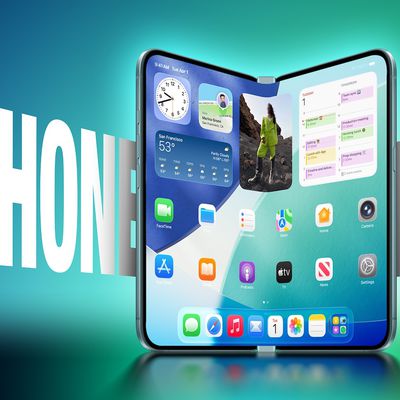
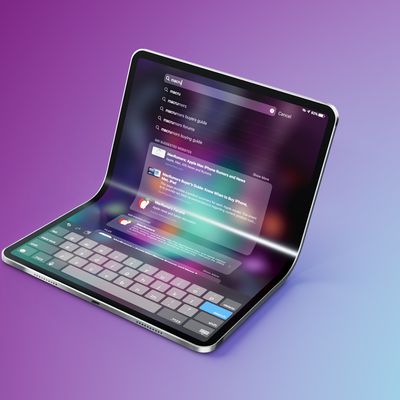
Reports suggest Apple's foldable iPhone will feature a 7.8-inch main display when unfolded and a 5.5-inch cover display. The device is expected to adopt a book-style design similar to Samsung's Galaxy Z Fold, rather than a clamshell form factor.
According to Kuo, the foldable iPhone may include two rear cameras, a single front-facing camera, and Touch ID integrated into the power button. The device could measure just 4.5mm thick when unfolded, and between 9mm and 9.5mm when closed.
Apple is expected unveil the foldable alongside the iPhone 18 Pro models in September, representing the biggest form factor change since the original iPhone in 2007. But if the display tech Samsung demoed at CES is what Apple plans to use, we may have already been treated to a preview of it.